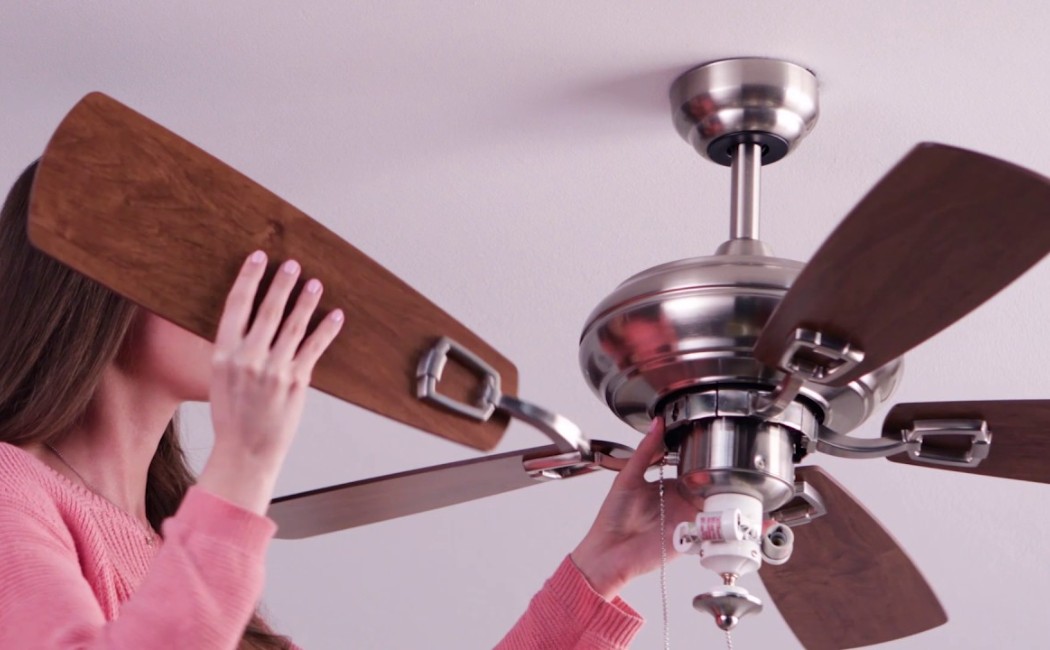
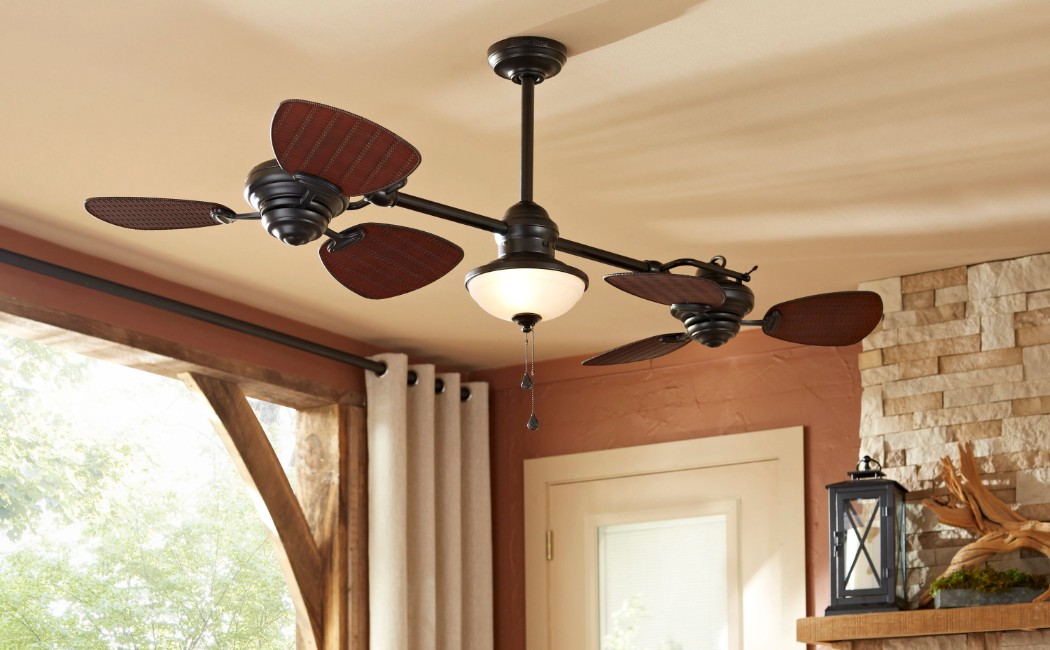
Many homeowners will try to do ceiling fan installations by themselves because it does not look complicated. So, can anyone install a ceiling fan? Ceiling fans nowadays come in a variety of styles and look very modern. Also, many ceiling fans come with smart features and additional lighting. Therefore, the installation of these ceiling fans is more complicated than it used to be. Some people who consider themselves to be ‘DIY admirers’ may decide to try installing it themselves; however, if not done properly, this can lead to safety risks, issues with the wiring, and expensive repairs down the line.
This guide will tell you the safety concerns with DIY ceiling fan installations, the common mistakes people make, and the wiring that is needed, as well as the parts that may be best to get a professional for.
Is It Safe to Install a Ceiling Fan Yourself?
Doing it yourself, ceiling fan installations can be done, but safety must be the main concern, and the person should have some basic knowledge of electronics. A lot of homeowners will try to install ceiling fans themselves if it is a new home build, or if it is a renovation project, and they may not consider it a big deal and assume it’s as easy as exchanging a light fixture.
When is This Safe to Do
- Reasonably new ceiling fan, rated electrical box in place
- Normal wiring is already set up
- Circuits do not need to change
- Light ceiling fan
If the above criteria are not met, little mistakes people think are not a big deal can become large. Examples of this would be loose mounting, electrical shocks, or fire risks.
When it is Not Advised to Do it Yourself
- Old homes that need to update their wiring
- Ceilings that are very high or that are angled in certain ways
- Installing smart controls or LED light fans
- Ceiling fans outdoors
In these cases, getting your ceiling fans installed by a professional means peace of mind in the long run to avoid any issues with electrical compliance and safety.
Avoid Dangerous Mistakes when Installing a Ceiling Fan
Several homeowners do not realize that there are potential risks and make critical mistakes when installing ceiling fans.
Common DIY Mistakes
- Using an unapproved ceiling box
- Wrong wire connections
- Improper grounding
- Loose mounting brackets
These mistakes are especially dangerous when installing outdoor ceiling fans. The exposure to weather elements requires specific protective wiring and moisture-proof fixtures.
Avoiding these mistakes not only protects your home but also guarantees that the fan functions to the best of its ability.
Is An Electrician Required To Install A Ceiling Fan?
In theory, yes, but in practice, it depends on the scenario. Installing ceiling fans in bedrooms might appear easier, but even they are usually indoors and are compatible with standard wiring. More dimmers and modern LED lights complicate the installation.
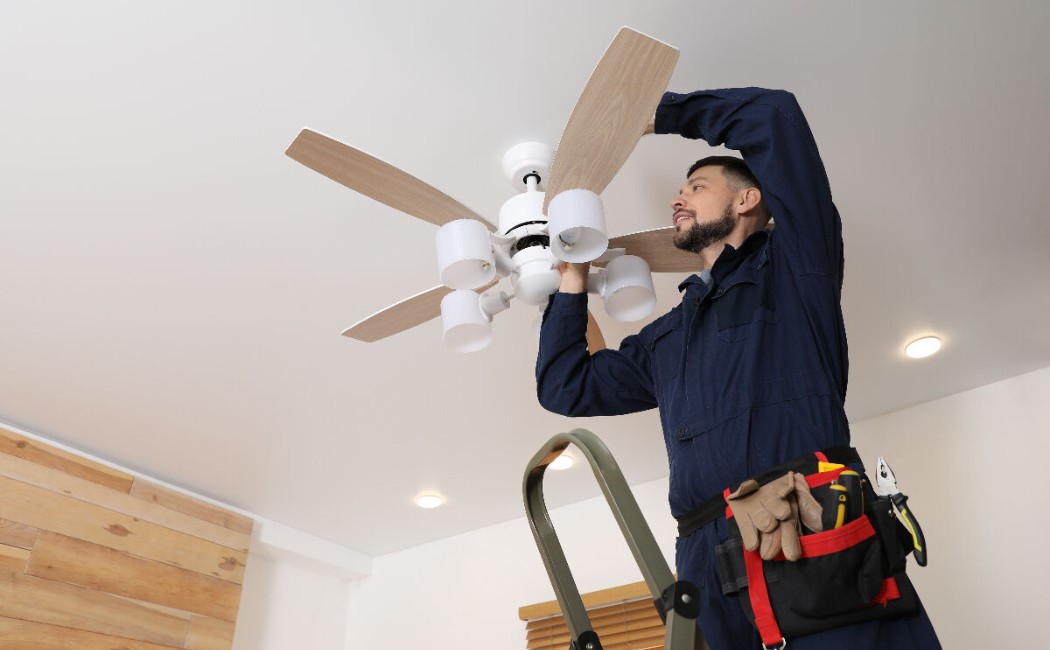
Think Before You DIY:
- Do you understand ceiling fan wiring diagrams?
- Can you safely work on a ladder?
- Do you know how to balance a fan properly?
If you answered no to these, it is usually safer and more efficient to hire a professional.
Advice on Safety for New Ceiling Fan Installers
If you plan on proceeding with the DIY option, it is important that you take some precautionary safety steps.
Basic Safety Checklist:
- Turn off the power at the breaker panel
- Verify voltage with a tester
- Use a ceiling fan rated junction box
- Install the mounting bracket securely
- Adhere to the manufacturer’s wiring instructions
Homes that have LED Strip Lights Installation or integrated light systems may require even more wiring knowledge. For these setups, it is wise to speak to solar lighting or other electrical professionals to avoid issues with agreement.
Ceiling Fans and Some Risks Most People Overlook
We tend to ignore many risks because they do not show immediately.
Some Residual Risks
- The fan wobbles due to poor mounting
- Overloaded electrical circuits
- Heat buildup from incorrect wiring
- Noise and vibration issues
Having an installed ceiling fan helps to manage load balance, mount stability, and electrical security — especially for homes with numerous light fixtures.
Ceiling Fan Wiring Tips
Knowing what’s involved in ceiling fan wiring is important for safety during installation.
Ceiling Fan Wiring Negligence Can Cost:
- Dedicated circuit for the fan and light combination
- Connected to the proper grounding wire
- Appropriate wire gauge
- Switch wiring that is compliant with the electrical code
Improper wiring not only violates electrical codes but also increases fire hazards. Homeowners exploring Residential ceiling fan ideas should always factor in wiring limitations before installation.
Why Should Electricians Be Hired for the Job of Installing Ceiling Fans?
We give a guarantee of professional service, good quality, and peace of mind, whether you are doing renovations for one part of the house or all of the home electrical system. Ceiling fan installation is a job we do right for you. You can trust Residential Electrical Service to do it safely and professionally. While doing it yourself sounds like a good way to save money, professional electricians offer:
- Compliance with electrical codes
- Performance durability
- Safety
- Integration with other lighting
This is important for the do-it-yourself homeowner who is planning to do other advanced upgrades or the complete Home Ceiling Fan Installation System.
Conclusion
It may be tempting to try to install a ceiling fan by yourself, but it’s important to recognize the risks involved. Installing a ceiling fan by yourself may be possible if you install ceiling fans often, but in most cases, a home will need updated wiring, a proper scale, and code compliance to avoid potential risks. Incorrect installations can cause electrical problems, increased fire risks, and cause the fan to underperform. With new ceiling fans, LED lights, and complicated wiring, the installation will be more challenging, and the safety risks will be higher. When unsure, the best option is to let experts handle the installation.
Frequently Asked Questions
Can I install a ceiling fan myself?
Indeed. Any homeowner with fundamental electrical knowledge may take on the task of simple installations. More complicated wiring or heavier fans, however, need the guidance of a professional.
Do I need a special electrical box for a ceiling fan?
Indeed. Light fixture boxes are standard, but because of a fan’s weight, a fan-rated box is a necessity for safety.
Is professional ceiling fan installation expensive?
For a fraction of the potential risks, professional installation is inexpensive, as it provides not only proper wiring and secure mounting, but also eliminates potential hazards.
Can ceiling fans be installed outdoors?
Yes, but outdoors, ceiling fans must be designed with the proper weather-resistant wiring and GFCI protection to eliminate potential hazards.
Are ceiling fans with LED lights harder to install?
Yes. That’s even more the case if there are dimmers or smart controls included, which is even more reason for professional guidance to be asked for safety.